


[:en]Sanlúcar de Barrameda´s strategical situation, on the commercial route that connected the port of Seville with the American continent, crucially influenced the cities development. Due to the importance of the commercial and trading harbor of Sanlúcar, the city became the residence for merchants and a point of origen of many religious orders that travelled to evangelize the New World, building unique palaces and convents in our city.

ITINERARY
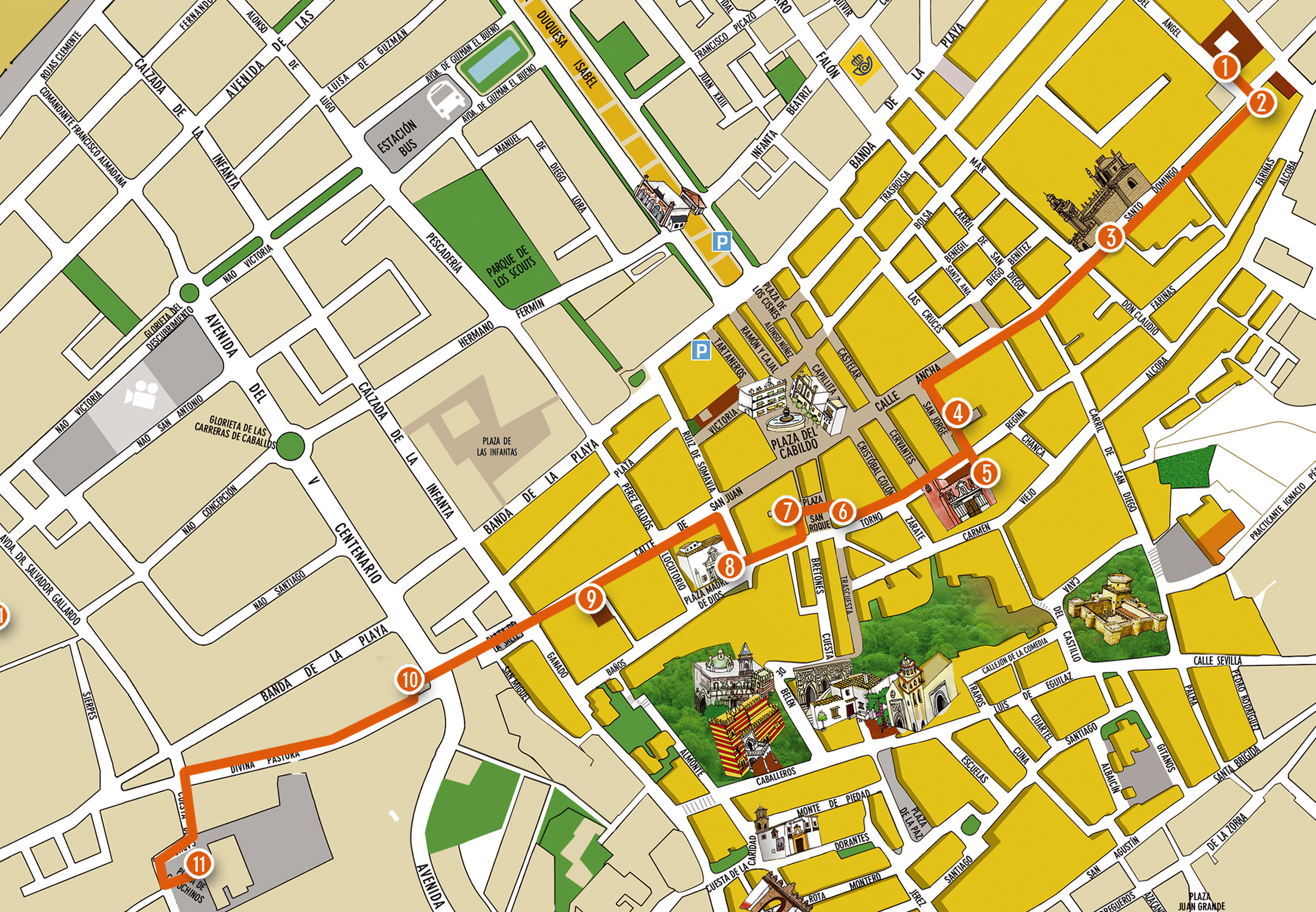
We will start the Route at the Santa Ángela de la Cruz Square.
A.- San Francisco (Saint Francis) Church
17th Century. The Franciscans Order was based here. Nowadays it is “La Salle” Saint Francis School . In the church, Classicist-Baroque style, you can find the headquarters for the Brotherhoods of the Santo Entierro and of the Silencio.
B.- San Nicolas (Saint Nicholas) Parish
17th Century. Headquarters for the Brotherhood of Jesús de la Expiración (17th century) and Our Lady of Esperanza (Hope)
Santo Domingo Street
You can see the former Houses of the Merchants of the Americas here.
C.- Santo Domingo (Saint Dominic) Church
16th Century. One of the most noteworthy monuments in Sanlúcar. It is made completely of ashlars stone. The area under the choir loft has an outstanding carving. The tombs of the Counts of Niebla and the sculpture of the Virgen of Rosario known as “La Galeona” are also remarkable in this building.
Ancha Street
Nowadays it is one of the main streets in Sanlúcar. It was formerly known as Ancha de los Mesones (taverns) due to being very numerous in the area.
San Jorge Street
D.- San Jorge (Saint George) Church
17th Century. Former religious center in the English merchants’ quarter. It currently hosts Sanlúcars Brotherhood of El Rocío
E.- Regina Coeli Convent
16th Century. Baroque style. Home of the nuns of St Clare Order.
Regina Street
F.- Santísima Trinidad (Holy Trinity) Church
Built in the 15th Century and founded by Alonso Fernández de Lugo, conqueror of the island of La Palma. The tombstone (15th century) and the coffered ceiling of the prebystery are a noteworthy view, where you can appreciate the powerful influence of América in the coffering.
San Roque Square
G.- Nuestra Señora de los Desamparados (Our Lady of the Defenseless) Church
17th Century. Baroque Style. Treasures interesting Baroque-style carvings.
Torno Street
H.- Madre de Dios (Mother of God) Church
15th Century. Beautiful baroque-style façade.
Madre de Dios (Mother of God) Square
Small but elegant Square where you can appreciate the Baroque styled windows of the Convent of Madre de Dios (Mother of God)
Baños Street
The façade of the bodega (winery) and the Palace of Orleáns-Borbón are spectacular. They are from the 19th Century.
Pasaje Virgen de las Angustias Street
I.- Nuestra Señora del Carmen (Our Lady of Carmen) Parish.
17th Century. It was the church of the former Carmelitas Descalzas convent.
Pradillo Square
The façade of the former Palace of Los Moreda (17th century) stands out.
Divina Pastora Street
The Palace of the Marquis of the Arizón House (18th Century) is a noteworthy sight. Old residence of the merchants of the Americas.
J.- Marquis of Arizón Palace
18th Century. An outstanding example a house of the Merchants of the Americas. It has a lookout tower.
Capuchinos Hill
K.- Capuchinos (Capuchins) Convent
17th Century. Was the headquarters for the missionaries whose mission was to evangelize the Americas.
End of the Route
OTHER INFORMATION
GUIDED TOURS
– ‘Sanlúcar Descúbrela’. Consult Rates. Tel: 630 76 54 83
– ‘Sanlúcar Smile’. Consult Rates. Tel: 669 663 008
– Sanlúcar Tours. Consult Rates. Tel: 659 44 97 02

[:es]
La estratégica situación de Sanlúcar de Barrameda, en la vía de la ruta comercial entre el puerto de Sevilla y el continente americano influyó crucialmente en el devenir histórico de la ciudad. Gracias a la importancia mercantil del puerto de Sanlúcar, la ciudad se convirtió en residencia de comerciantes y en lugar de partida de numerosas ordenes religiosas que evangelizaron el Nuevo Mundo, edificándose singulares palacios y conventos.
RECORRIDO
Inicio del recorrido en Plaza de Santa Ángela de la Cruz
A. Iglesia de San Francisco
Siglo XVII. Alojó a la Orden de Franciscanos. Actualmente es el colegio San Francisco “La Salle”. En la iglesia, de estilo barroco clasicista, tienen su sede la Hermandad del Santo Entierro y la Hermandad del Silencio.
B. Parroquia de San Nicolás
Siglo XVII. Sede de la Hermandad de Jesús de la Expiración (s. XVII) y Ntra. Sra. de la Esperanza.
Calle Santo Domingo
Destacan las antiguas casas de Cargadores de Indias.
C. Iglesia de Santo Domingo
Construida en el siglo XVI, por su importancia histórica y artística constituye uno de los monumentos más destacados de Sanlúcar. El edificio está realizado completamente en piedra de sillería y la decoración en relieve del sotocoro es de gran belleza. Destacan los sepulcros de los Condes de Niebla y la talla de la Virgen del Rosario llamada “La Galeona”.
Calle Ancha
Hoy arteria principal de la ciudad, antiguamente se denominaba calle Ancha de los Mesones debido al número de ellos que existían.
Calle San Jorge
D. Iglesia de San Jorge
Siglo XVII. Antiguo centro religioso del barrio de comerciantes ingleses. Actualmente es sede de la Hermandad del Rocío de Sanlúcar.
E. Convento de Regina Coeli
Siglo XVI. Estilo barroco. Sede de la Orden de las Clarisas
Calle Regina
F. Iglesia de la Santísima Trinidad
Realizada en el siglo XVII y fundada por Alonso Fernández de Lugo, conquistador de la isla de La Palma. Destaca la lauda sepulcral del siglo XV y el rico artesonado del presbiterio, que muestra gran influencia en los artesonados de América.
Plaza de San Roque
G. Iglesia de Ntra. Sra. de los Desamparados
Siglo XVIII. Estilo barroco. Conserva interesantes tallas barrocas.
Calle Torno
H. Convento de Madre de Dios
Siglo XV. Bella portada del Torno de estilo barroco.
Plaza de Madre de Dios
Elegante plazuela en la que destacan las ventanas barrocas del convento de Madre de Dios.
Calle Baños
Destaca la fachada de las bodegas y caballerizas del Palacio de Orleáns-Borbón, del siglo XIX.
C/ Pasaje Virgen de las Angustias
I. Parroquia de Ntra. Sra. del Carmen
Siglo XVII. Era la iglesia del antiguo convento de Carmelitas Descalzos.
Plaza del Pradillo
Destaca la fachada de la antigua casa palacio de los Moreda (s. XVII).
Calle Divina Pastora
Destaca el Palacio del Marqués de Casa Arizón (s. XVIII). Antigua residencia de comerciantes con América.
J. Casa de los Marqueses de Arizón
Ejemplo de vivienda de Cargadores de Indias. Destaca la torre mirador.
Cuesta de Capuchinos
J. Convento de Capuchinos
Siglo XVII. Fue sede de misioneros para la evangelización de América.
Fin de recorrido
INFORMACIÓN DE INTERÉS:
RUTA TURÍSTICA GUIADA

[:]